A verification code and a promotional email both look like "sending an email", but to receivers and regulators they are completely different things. When you mix them, the usual result is that the promotion gets reported as spam, and the verification codes follow it into the spam folder.
How to tell them apart
| Transactional | Marketing | |
|---|---|---|
| Examples | Verification codes, signup confirmations, password resets, order and billing notices | Product news, promotions, weekly digests, newsletters |
| Triggered by | Something the user did | You decide when to send |
| Recipient's attitude | Waiting for it | May not want it |
| Unsubscribe link | Usually not needed | Required by law |
| Complaint rate | Very low | Noticeably higher |
A simple test: if the user would think "something's broken" when this email doesn't arrive, it's transactional.
Why keep them apart
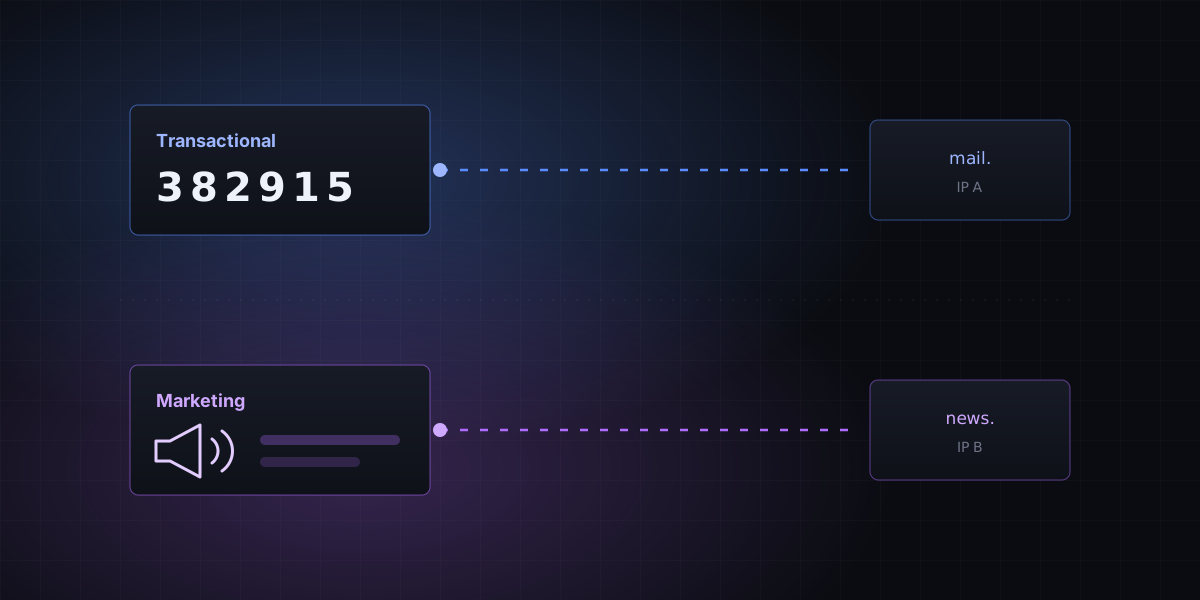
Receivers track reputation by domain and IP. No matter how good your marketing mail is, some people will click "Report spam". If it shares a domain and IP with your verification codes, those complaints count against the codes too.
Separating them is simple:
- Transactional mail from
mail.example.comornotify.example.com - Marketing mail from
news.example.com - At higher volume, send the two types from different IPs
Legal requirements
Most jurisdictions regulate marketing email: get consent first, offer a way to unsubscribe, and identify the sender truthfully. Transactional email is treated much more leniently, provided it really is transactional. You can't stuff a long advertisement into a password reset email.
What BulkMail is for
BulkMail focuses on transactional email: a simple API, fast delivery, and signing, retries and bounce handling done for you. You can also send campaigns to subscribers. Every campaign message gets an unsubscribe link automatically, and you can send right away or schedule it.